For Mixed Camera Fleets
Camera Agnostic VMS Cloud Video Management for the Mixed-Brand IP Cameras You Already Own
Axis at headquarters, Hanwha at the warehouse, an old Hikvision NVR at the store you acquired last year. Connect all of it to one console with AI alerts and plain-English search, and buy your next camera on price instead of on whatever your software will accept.
ONVIF and RTSP cameras and NVRs. No appliance to buy, no rip and replace.
Starter $49 for 1 camera, Plus $149 for 2, Pro $449 for 6, Elite $1,499 for 20. Yearly billing saves 20 percent.
Which VMS works with any camera brand?
Two kinds of platform do. Open on-premise VMS products such as Genetec Security Center, Milestone XProtect and Hanwha Wisenet WAVE support thousands of third-party camera models through drivers and ONVIF. Cloud platforms such as Eagle Eye Networks and Surveillant connect to any camera or recorder that exposes an ONVIF or RTSP stream. Platforms built around their own cameras, Verkada being the best known, need an extra connector box for anything else.
The practical difference between the two open kinds is who does the work. An on-premise VMS needs a server per site, driver updates and usually an integrator. A cloud VMS needs an outbound internet connection per site and a login. Surveillant sits in the second group and adds AI detection and plain-English search to every camera it touches.
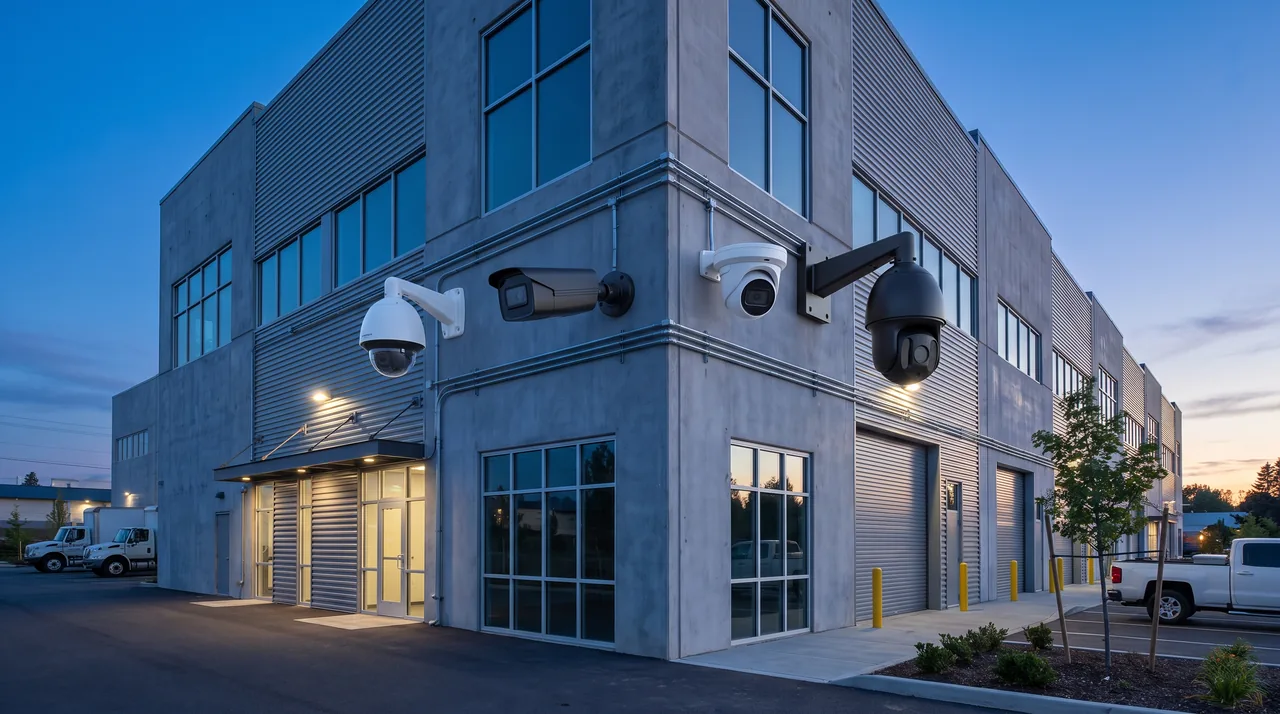
A typical estate after ten years of replacements: dome, bullet, turret and PTZ from different makers, all on one wall.
Why Buyers Ask for It
Four Situations Where Camera Lock-In Gets Expensive
Nobody searches for a camera agnostic VMS on a quiet day. It is usually one of these.
Acquisitions
You bought sites with someone else's cameras
A retailer or property group that grows by acquisition inherits a different system at every new location. Replacing 40 working cameras to match the house brand can cost $20,000 or more in hardware and labor before any software is bought. Connecting them as they are costs a login.
Banned brands
You have to phase out Hikvision or Dahua
Federal contractors and many state agencies are replacing cameras covered by Section 889 of the NDAA. A camera agnostic platform lets you swap them a building at a time, on your budget cycle, while the software, the alert rules and the operators' habits stay the same.
Renewal leverage
Your camera vendor raised the license price
When cameras only work with their maker's cloud license, the renewal quote is not really negotiable. Owning cameras that speak ONVIF and RTSP means the software line can be shopped every year, which is the only thing that keeps it honest.
Standards change
ONVIF Profile S support ends March 31, 2027
ONVIF has set the end of Profile S support, with Profile T as the successor. New cameras should be Profile T. Your older Profile S cameras still stream over RTSP, so a platform that reads RTSP keeps them useful until you choose to replace them.
What You Get
One Console for Every Camera, Whoever Made It
Any ONVIF or RTSP camera
Paste the stream address, add the camera by its ONVIF host and port, or import a whole list from a CSV file. Axis, Hanwha, Bosch, Avigilon, Uniview, Hikvision, Dahua and most commercial brands expose one.
Connect the NVR, not each camera
Link an existing recorder once and bring its channels in together, so a 32-channel site is one setup instead of 32.
AI alerts on every brand
People, vehicles, loitering, after-hours activity and zone rules work the same on a ten-year-old bullet camera as on last month's dome, because the analysis runs in the cloud.
Plain-English search
Type what happened, for example a white van at the east gate after 10pm, and get clips from every connected camera across every brand at once.
Every site in one place
Cameras are grouped by location, with roles and team permissions, so a regional manager sees twelve stores without twelve logins.
Alerts where your team works
Email, SMS, Slack and webhooks, with escalation chains when nobody acknowledges. Alerts usually arrive within a minute or two of the event.
Evidence export
Clips leave with a chain of custody record and a SHA-256 hash, the format police and insurers ask for.
REST API
API keys for cameras, alerts, analytics and search, so the camera estate can feed a ticketing tool or a monitoring center.
Face blurring
Blur faces in shared clips when a request or a privacy policy calls for it, regardless of which camera recorded them.
How It Works
From Mixed Fleet to One Console in Four Steps
1
Create your account
Sign up and pick a plan by camera count. No hardware ships, so nothing waits on a delivery.
2
Add cameras or an NVR
Enter RTSP addresses, add ONVIF cameras by host, import a CSV, or connect the recorder. Group them by site as you go.
3
Write alert rules
Start from a template or describe the event in plain English, and choose who hears about it and how.
4
Search and review
Search across every brand at once, review alerts, and export evidence when something happens.
Honest Comparison
Camera Agnostic VMS Options Compared
Prices are the vendor's own where published. Milestone figures are reseller street prices and labeled as such. Where a vendor publishes nothing we say so instead of guessing.
| Platform | Camera support | Where it runs | Software price | Best for |
|---|---|---|---|---|
| Genetec Security Center | Open platform, very wide third-party list | On premise, or SaaS through a Cloudlink appliance | SaaS $149 to $199 per camera per year, storage extra | Enterprises needing video, doors and plates unified |
| Milestone XProtect | Open platform, very wide third-party list | Your servers, on premise | About $75 to $329 per device license through resellers, plus care plan | IT teams that want to own the servers |
| Hanwha Wisenet WAVE | Hanwha plus ONVIF third-party cameras | Your servers, with cloud access | Per-channel licenses through distributors; not published by Hanwha | Smaller sites wanting a simple on-premise VMS |
| Eagle Eye Networks | Wide third-party support | Cloud, with an on-site bridge or recorder | Not published; sold through resellers | Multi-site buyers working with a dealer |
| Verkada | Built for Verkada cameras; others through a Command Connector | Cloud | Not published per license; camera hardware $699 and up | Buyers standardizing on one camera brand |
| Surveillant | Any ONVIF or RTSP camera; verified NVRs from six makers | Cloud, no appliance | $49 to $75 per camera per month, AI included | Mixed fleets wanting AI and search without new hardware |
Two things to read from that table. First, the cheapest-looking software rows are cheap because they exclude servers, storage, analytics and installation; ours is higher per camera because the AI analysis and search are in it. Second, the platforms that record on premise are the ones to choose if your policy requires 90 days or more of continuous recording on your own hardware. Many buyers do both: keep the recorder they own for retention, and add a cloud layer for alerts and search. Our Genetec pricing guide and Milestone pricing guide break down the full bill for each.
Pick Something Else If
A camera agnostic platform is the right call for most mixed fleets. These are the cases where it is not us.
Your site has no reliable internet
A cloud platform needs roughly 1 to 4 Mbps of upload per camera it analyzes. Remote sites on thin links are better served by an on-premise VMS with edge analytics.
You need doors and plates in one system
If access control and a plate reader fleet must share one audit trail with video, an enterprise platform such as Genetec is built for that. See our Coram vs Genetec comparison.
You need sub-second alerts
Our analysis runs on short clips, so alerts land within a minute or two. Perimeter intrusion systems that must trigger lights and sirens instantly need edge detection on the camera.
Questions Buyers Ask About Camera Agnostic VMS
What does camera agnostic mean in video surveillance?
It means the software does not care who made the camera. It connects through open standards, mainly ONVIF and RTSP, so you can keep a mixed fleet, buy the next camera on price and features, and replace a banned or failing brand without changing the platform your team uses every day.
Can I use my existing NVR with a cloud VMS?
Yes. Surveillant can connect to an existing recorder instead of each camera one by one, and we have verified Hikvision, Dahua, Uniview, Axis, Bosch and Hanwha NVR systems. The recorder keeps recording as before, and the cloud layer adds AI alerts, search and multi-site access on top of it.
How much does a camera agnostic VMS cost?
It depends on the model. Genetec Security Center SaaS publishes $149 to $199 per camera connection per year before storage and installation. Milestone device licenses run roughly $75 to $329 per camera through resellers. Surveillant publishes $49 to $75 per camera per month with AI analysis, search and alerts included.
Is Verkada camera agnostic?
Not by design. Verkada is built around its own cameras and licenses, and third-party cameras connect through a separate Command Connector appliance. If most of your cameras are already another brand, an open or cloud platform that connects to ONVIF and RTSP directly usually costs less to adopt. More in our Verkada alternative page.
Do I need ONVIF Profile T instead of Profile S?
For new purchases, look for Profile T. ONVIF has announced that Profile S support ends on March 31, 2027, and Profile T covers modern H.265 streams and event handling. Existing Profile S cameras still stream over RTSP, which is how Surveillant connects to them.
Will a camera agnostic VMS work with cameras on different networks or sites?
A cloud VMS handles that well, because each site only needs an outbound internet connection rather than a VPN back to a central server. Budget 1 to 4 Mbps of upload per camera. Surveillant groups cameras by location so a regional manager sees every site in one console.
Related Pages
Put Every Camera You Own in One Console
Connect a camera or an NVR today and see AI alerts and search on your own footage. $49 to $75 per camera per month, published, no appliance.